



The last several years have seen repeated instances of individuals murdering as many people as they could before taking their own lives. These horrific occurrences are universally denounced as evil. People of all faiths, as well as those who profess no faith, join in that condemnation.
Yet while atheists may feel personal revulsion at such acts, because of their rejection of God as the standard setter for human behavior, they have no basis on which to declare such behavior “wrong” or “evil.”
If a disturbed person finds his own life so painful that he has decided to end it, and he thinks that pouring out his rage on others will give him momentary pleasure before he does so, what reasons could an atheist give for declaring such a program to be immoral? For atheists there is simply no way, outside of their own personal emotional reactions or opinions, to define any moral distinction between a Hitler and a Mother Teresa.
Here’s why.
Without God, Human Beings Are Just Biological Machines
If, as atheists claim, there is no Creator, humans are nothing more than accidents of evolution. They are, in essence, bio-chemical machines, no different except in level of complexity from a computer. As famed atheist Richard Dawkins puts it in his book The Selfish Gene, “We are survival machines – robot vehicles blindly programmed to preserve the selfish molecules known as genes.”
We are survival machines – robot vehicles blindly programmed to preserve the selfish molecules known as genes.— Famed atheist Richard Dawkins
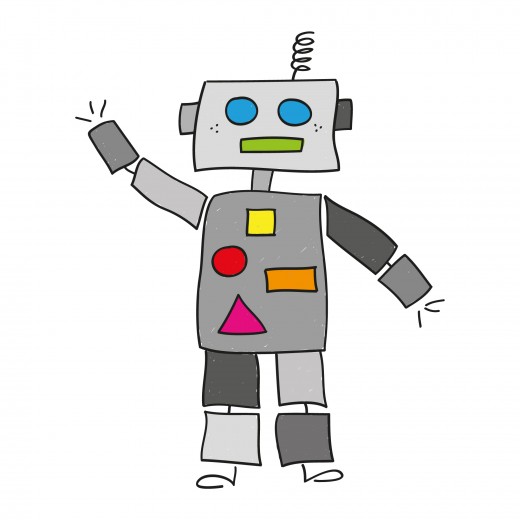
Source: SisCiel via RGBStock.com
If human beings were not created by God, and are only the products of blind, unplanned, and purposeless evolution, they are nothing more than organically based computers or robots, no different in essence from their electronic counterparts. They are simply biological machines that have been programmed, through millions of years of evolution and natural selection, to react to their environment in certain very complex ways. That complexity does not, however, change the essence of what they are.
Do People Have Souls?
But, someone may counter, people are not like machines – they have thoughts and feelings. Yes, but are those qualities any different than what sophisticated programming could produce in a computer?
For example, a computer applies rules of logic on a very complex level, and may appear from the outside to think or feel emotions. In reality it does no such thing. It only reacts, on the basis of its programming, its past experiences (which, by design, may alter its programming), and the inputs it is currently receiving.
If human beings are the products of evolutionary chance rather than being the special creations of God, any of their activities that may appear to result from “thought” are, in reality, the result of nothing more than the interaction of an individual’s genetic programming and personal history with the inputs they receive from their environment.
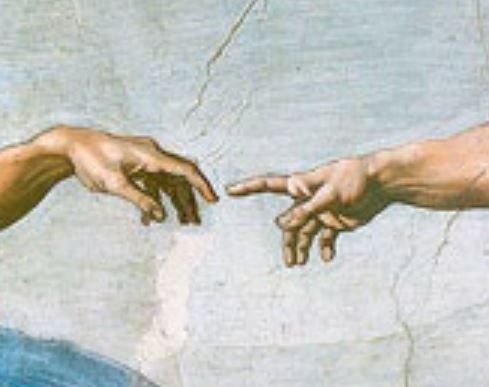

If God did not create human beings, then people, like computers, cannot possess anything that goes beyond the physical structures of their bodies. They have nothing that could be called a “soul.” They are complex biological mechanisms, and nothing more.
If human beings are not special creations of God, then they cannot possibly have souls. They are biological machines, and nothing more.
There Is No Moral Dimension to Shutting Down a Machine
The moral consequences of this way of thinking are immense.
If human beings are indeed nothing more than bio-chemical machines, then a person has no more real purpose or significance than a housefly. And we swat houseflies unmercifully, with no thought of any moral considerations in doing so.
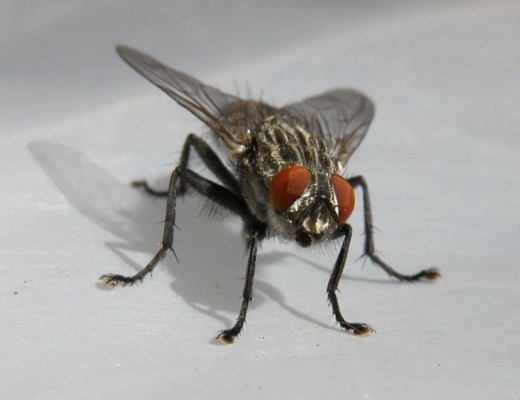
Source: Alexey Goral via Wikimedia (CC BY-SA 3.0)

An experiment carried out by Dr. Christoph Bartneck, a robotics researcher at the University of Canterbury in New Zealand, illustrates the moral abyss into which this view of our nature would pitch the human race.
An Experiment That Shows People Will “Kill” a Machine
Dr. Bartneck set up a scenario to test, as National Public Radio reporter Robert Seigel put it, “What would happen if a machine explicitly addressed us as if it were a social being, a being with a soul? What would happen, for instance, if a machine begged for its life?”
In Dr. Bartneck’s experiment, a human subject was paired with a robot cat that talked like a person. The two verbally interacted, as would two people, while they teamed up to play a game against a computer. At the end of the game, the humans were told it was their responsibility to turn their robot partner off.
Dr. Bartneck says, “It was made clear to them what the consequences of this would be; namely, that they would essentially eliminate everything that the robot was. All of its memories, all of its behavior, all of its personality would be gone forever.”
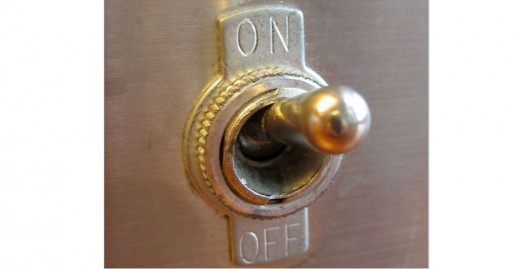
Switching the cat robot off
When it came time for the human to shut off — to “kill” — the cat robot, it was programmed to beg for its life, pleading with the person to not shut it off. It was apparent that most of the human test subjects were very disturbed by the prospect of doing so. The experiment was set up to encourage the human to interact with the robot as if it were a person, and all the individuals in the test group struggled for some time with the decision to turn it off.
But here is the key: in the end they all did it.
Source: Jason Zack via Wikimedia (CC BY-SA 2.5)

As Siegel put it, “There they sit, in front of a machine that is no more soulful than a hair dryer; a machine they know, intellectually, is just a collection of electrical pulses and metal. And yet they pause, waiting, until finally, they turn the knob that kills it.”
Because they understood that the robot was only a soulless machine, all the people involved in the experiment eventually brought themselves to “kill” it, simply because they had been instructed to do so.
Without God There Can Be No Morality
Think what it would mean for human society if this understanding of the nature of human beings, which is the unavoidable corollary of removing God from the equation, became widely accepted. If people are nothing more than biological machines, as without a Creator they can only be, there is no moral consideration in shutting off (killing) any of those machines. There is no moral dimension to anything one might choose to do to a machine.
How can any action imposed on entities that are acknowledged to be nothing more than complex machines be called immoral or wrong?
Only God’s Standards of Morality Are Universal and Binding
If people are just soulless biological machines, why is it any more “immoral” to deactivate a person than it is to shut off a computer? If human beings were not created by God, and thereby endowed with transcendent purpose and value, they can have no more significance than any other machine.
That’s why when we refuse to acknowledge God as our Creator, and that He has imposed universally binding standards of right and wrong concerning the way we are to treat one another, we abandon the very concept of morality.
But Many Atheists Conduct Themselves Morally!
Of course many people who don’t believe in God maintain high standards for their own personal conduct. Some of them are far more upstanding in the way they live their lives than many who do claim belief in God. But morality is not about the choices individuals make in their own lives. It’s about the existence of a standard of conduct that is universally binding on all human beings, to which they can (and will) be held accountable.
When atheists protest that they are strict in adhering to their own set of “moral” standards, that’s great. But on what basis can that standard be imposed on anyone else? An atheist’s personal moral standard is, after all, personal. Why should other people pay any attention to it? The most an atheist could say to the disturbed person we mentioned at the outset of this article is, “You shouldn’t harm other people because it violates my personal sense of right and wrong.” It’s doubtful that such a declaration would be persuasive.
So, Can Atheists Be Moral?
No, atheists cannot be moral because from an atheistic worldview, no such thing as morality can exist.
Interview with Dr. Bartneck – We treat robots like people
© 2014 Ronald E Franklin